
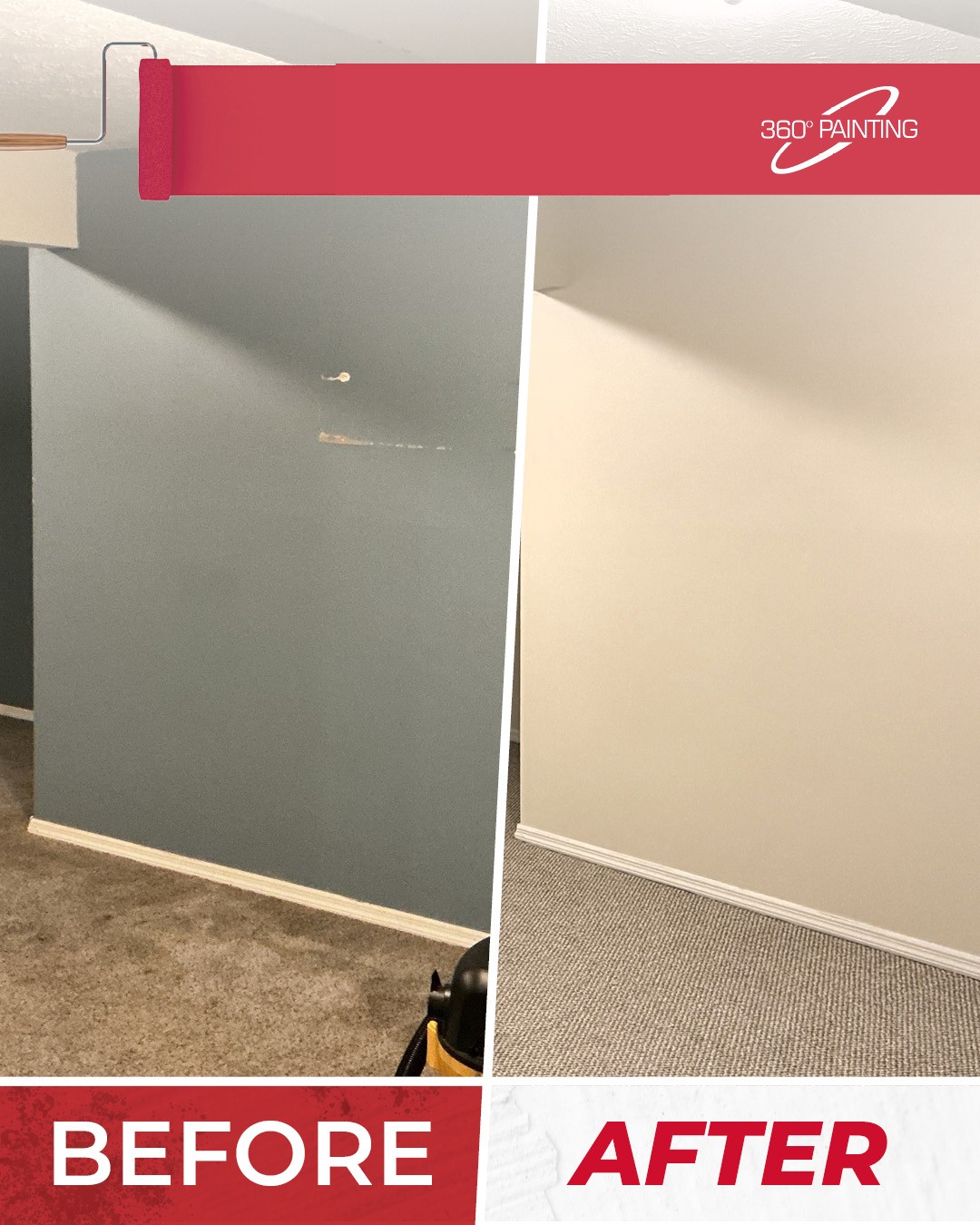
Small wall damage doesn't always mean you need to repaint an entire room. Nail holes, minor scuffs, and isolated marks can sometimes be repaired and touched up successfully. But when damage is widespread, the existing paint has aged, or the touch-up doesn't blend with the surrounding finish, repainting the entire wall may produce a much better result.
360° Painting of Dayton helps homeowners determine whether their walls need a simple repair, a single-wall repaint, or a more complete room refresh.
Can You Touch Up Paint Without Repainting the Whole Wall?
Sometimes.
A successful paint touch-up depends on several factors, including the age of the existing paint, whether you have the original color and product, the sheen, lighting, and how the original paint was applied.
Touch-ups tend to work best when:
- The existing paint is relatively new
- You have the original paint
- The damage is small
- The surrounding wall is in good condition
- The original and touch-up application methods are similar
Even with the exact same paint, however, a touch-up isn't guaranteed to disappear completely.
Why Does Touch-Up Paint Sometimes Look Different?
One of the most frustrating situations for homeowners is using the correct paint color and still seeing the repaired area.
There are several reasons this happens.
Paint Changes Over Time
Walls can fade or change slightly from sunlight, cleaning, normal wear, and age. Paint left in a can may also differ slightly from what has been on the wall for several years.
Sheen Makes a Difference
Flat, matte, eggshell, satin, and other finishes reflect light differently. Using the wrong sheen can make a touch-up stand out even when the color is correct.
Application Can Affect Appearance
A spot applied with a brush may look different from a wall originally painted with a roller. Even roller texture can vary depending on the nap and application.
Repairs Change the Surface
Drywall compound, filler, or newly patched areas can absorb paint differently from the surrounding wall. Proper sanding and priming may be needed before finish paint is applied.
What About Nail Holes and Small Drywall Damage?
Small nail and picture-hanger holes are generally straightforward to repair.
Larger anchor holes, dents, gouges, and damaged drywall may require more preparation to make the repair disappear.
The quality of the repair becomes especially important when the wall receives a lot of natural or directional light. A poorly sanded patch may still be visible after painting because the surface texture is different, even if the paint color matches perfectly.
For larger repairs, proper patching, sanding, priming, and repainting may be necessary to restore a uniform appearance.
Should You Repaint One Wall or the Entire Room?
You don't always need to repaint the entire room.
If one wall has significant damage but the remaining walls are in good condition, repainting the repaired wall from corner to corner may provide the cleanest solution.
Corners create natural stopping points, which can make slight differences less noticeable than a touch-up in the middle of a wall.
Repainting the entire room makes more sense when:
- Multiple walls have damage
- The existing paint is significantly faded
- There are numerous patches and touch-ups
- You want to change the color
- Walls are heavily scuffed or dirty
- The existing finish has become uneven
- The room simply looks worn
High-Traffic Areas Usually Show Wear First
Some areas of the home naturally require painting sooner than others.
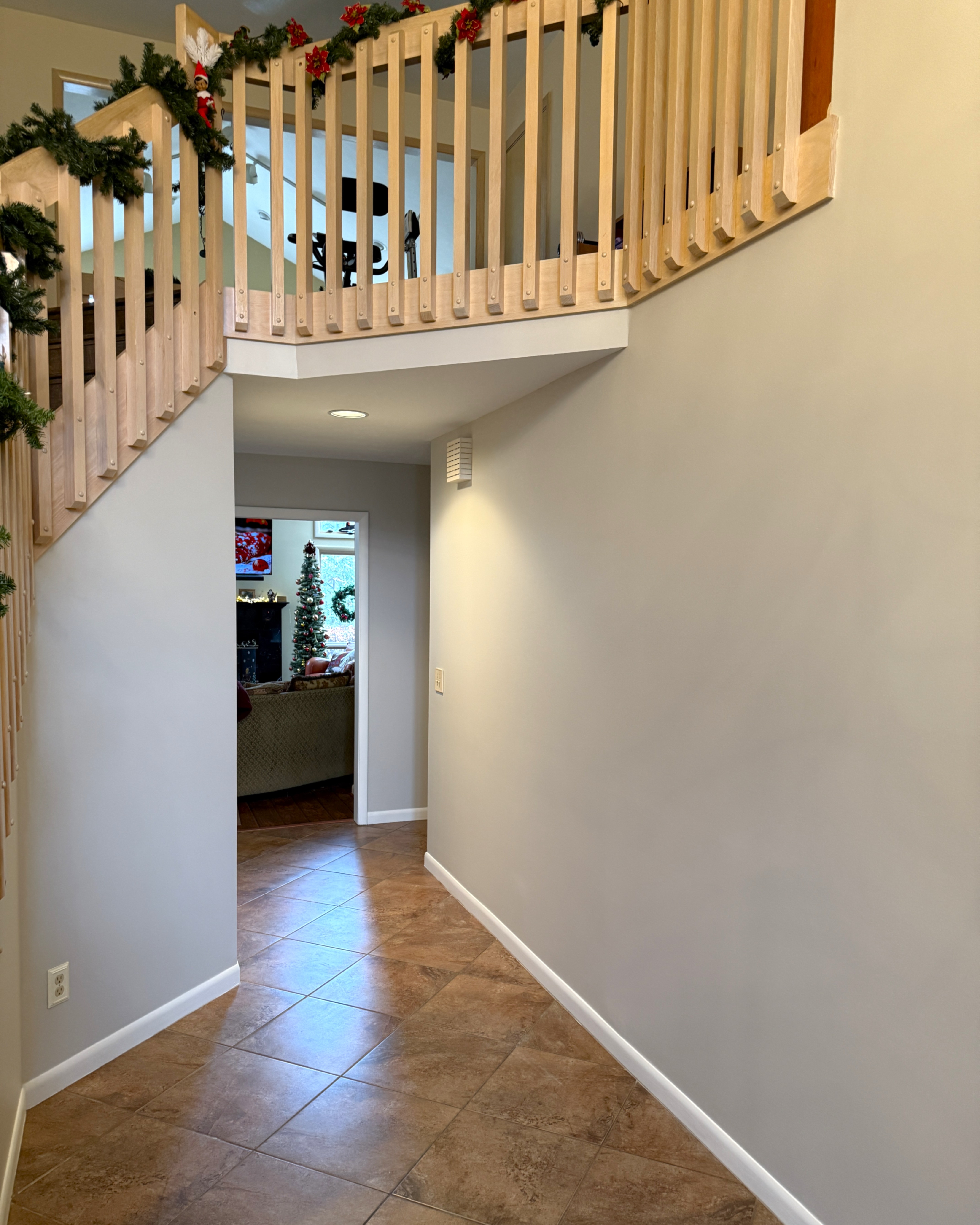
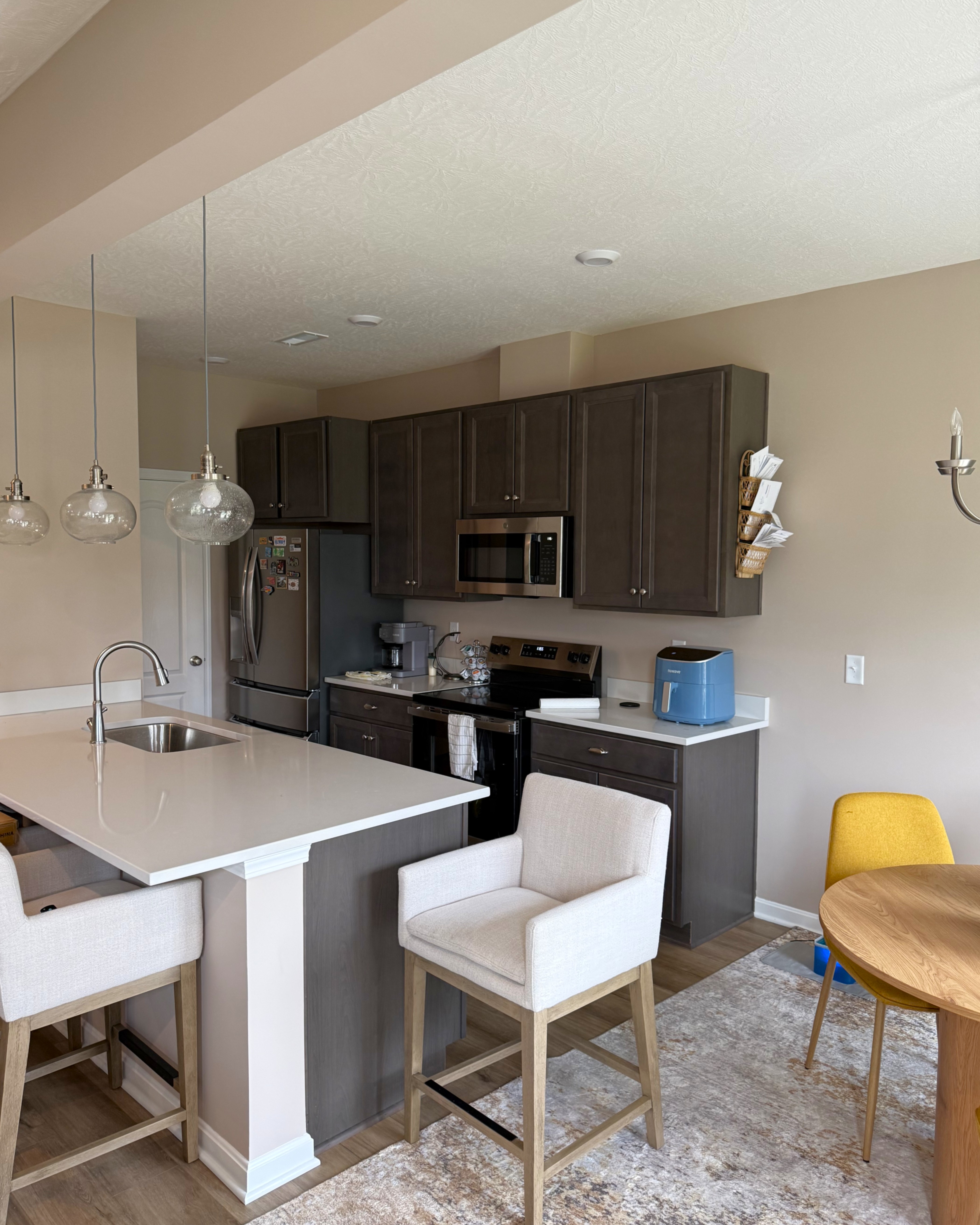
Hallways, stairwells, entryways, kitchens, family rooms, and children's rooms often accumulate more scuffs, fingerprints, dents, and wall damage than lower-traffic spaces.
Homes with pets can also show additional wear around corners, doorways, and lower portions of walls.
If you repeatedly find yourself touching up the same areas, it may make more sense to repaint and consider a more durable, washable coating for the next application.
Can You Paint Over Scuff Marks?
Minor marks may sometimes be cleaned instead of painted.
However, aggressive scrubbing can burnish certain paint finishes, leaving a shiny spot that becomes more noticeable than the original mark.
If cleaning doesn't solve the problem, repainting may be necessary.
This is another reason coating selection matters in high-traffic areas. Paint designed for better washability and scuff resistance can make future maintenance easier.
What If You Don't Know the Existing Paint Color?
Not having the original paint doesn't necessarily prevent repainting.
A paint sample can sometimes be used for color matching, but even a close color match may remain noticeable when applied only to a small section of an older wall.
In those situations, painting from corner to corner is often the better approach.
If you're already repainting an entire room, you also have the opportunity to update the color or choose a finish better suited to how the room is used.
Interior Wall Repair and Painting in the Dayton Area
360° Painting of Dayton provides drywall repair, wall preparation, touch-up evaluation, and interior painting for homeowners throughout Fairborn, Beavercreek, Huber Heights, and surrounding Dayton-area communities.
Whether you have a few damaged areas or an entire room that needs refreshing, we can help determine how much painting is actually necessary.
Touch Up or Repaint? Let Us Take a Look
If the damage is small and the existing paint is in good condition, a touch-up may be enough. If repairs are extensive or the existing finish has aged, repainting the wall or room usually provides a more consistent result.
360° Painting of Dayton can evaluate the damage, complete necessary wall repairs, and recommend the most practical painting approach.
Contact 360° Painting of Dayton to request a free interior painting estimate.