

If you live in Leavenworth and you are thinking about painting your home's exterior, timing is everything — and the fall deadline comes faster than most people realize.
Leavenworth sits in northeast Kansas where the seasons swing hard. Summers are humid and hot, winters bring genuine freezes, and the stretch in between — that comfortable painting window — is shorter than homeowners in milder climates ever have to worry about. Exterior painting in Leavenworth, KS requires planning around all of it. 360° Painting of Saint Joseph works with Leavenworth homeowners on exactly this kind of seasonal planning, helping families avoid costly mistakes that come from painting too late in the year.
Leavenworth's Fall Weather Closes the Painting Window Fast
September in Leavenworth can feel like a great time to paint. Days are warm, the brutal summer humidity has usually softened, and the light is good. That comfort is partly misleading. Overnight temperatures in northeast Kansas can drop sharply even when the afternoons feel mild, and it only takes one cold night to compromise a fresh coat of paint that has not fully cured yet.
By mid-October, that risk becomes much harder to manage. Cold fronts push through the region quickly, often with little warning. A project that looks doable on a Tuesday can run into a hard freeze by Friday night. That short turnaround is one of the main reasons experienced painters in this area treat October as a soft deadline rather than a comfortable planning target.
The Temperature Range That Makes or Breaks Exterior Paint
Most quality exterior paints — including popular latex and acrylic products like Sherwin-Williams Duration and Benjamin Moore Aura Exterior — are formulated to be applied and cured within a specific temperature band. The acceptable range varies by product, surface temperature, substrate, and conditions, so the selected product's data sheet should control the decision. Painting outside the selected product's limits can create adhesion and curing problems.
Heat is the less talked-about issue. In Leavenworth summers, afternoon temperatures can push siding surface temperatures well above the air temperature, especially on south- and west-facing walls. Paint applied to an overheated surface dries too fast on the outside while the layer underneath stays wet, which leads to bubbling, cracking, and poor adhesion. Early morning application on hot days helps, but it is a real constraint that shapes the daily schedule on every summer job.
Why Overnight Lows Matter More Than Daytime Highs
Most homeowners check the afternoon forecast and feel good about a warm day ahead. What they miss is the overnight low. Paint applied in the afternoon still needs hours to cure, and if the temperature drops below the product's minimum threshold before that curing window closes, the film forms incorrectly. That means the paint may look fine at first and then begin to crack, peel, or chalk within a single season.
In Leavenworth's fall, overnight lows can dip below 40 degrees while afternoons still feel comfortable. That gap between daytime and nighttime temperatures is exactly the scenario that catches homeowners and inexperienced painters off guard. Checking both the high and the low — and accounting for the hours after application — is non-negotiable for a paint job that lasts.
How Cold Snaps Ruin Paint Before It Cures
When paint freezes before it cures, the water inside the paint film expands. That expansion breaks the chemical bonds the paint needs to form a durable, protective layer. The result shows up in a few specific ways:
- Uneven sheen across the surface that cannot be corrected without repainting
- Soft or tacky spots where the film never fully hardened
- Peeling that begins at edges and seams within the first winter
- Poor adhesion that allows moisture to get underneath the paint layer
- Color inconsistency from sections that cured under different conditions
Warranty coverage varies by manufacturer and product, so review the applicable warranty terms before assuming a failure is covered. That makes the timing decision not just a quality issue but a financial one. A paint job that peels after one winter has to be stripped and redone, which costs more than doing it right the first time.
Ask 360° Painting of Saint Joseph how its two-year paint warranty applies to exterior work and seasonal conditions. That standard protects homeowners because it requires the job to be done correctly from the start — right product, right surface prep, right conditions.
Humidity and Surface Dryness in Leavenworth's Fall Season
Northeast Kansas humidity is not just a summer problem. Even as temperatures cool in September and October, moisture levels in the air and on surfaces can stay high enough to interfere with paint adhesion. Leavenworth sits close enough to the Missouri River corridor that morning fog and dew are common well into fall, keeping siding damp for hours after sunrise.
Surface moisture is one of the most common reasons exterior paint fails prematurely. Paint applied over a damp surface traps that moisture underneath the film. As the surface dries from underneath, it pushes against the paint layer from below, breaking the bond and causing blistering or peeling that shows up within months rather than years.
Morning Dew and Shaded Siding: What to Watch For
North-facing walls and areas shaded by mature trees dry out significantly later in the day than surfaces that get direct sun. In Leavenworth, many older neighborhoods have large trees that keep siding shaded through mid-morning or later. On a fall day, that shaded siding may not be dry enough to paint until well into the afternoon — which then leaves less curing time before evening temperatures drop.
The practical fix is simple but important. Run your hand across the surface before painting begins. If it feels cool to the touch or shows any visible moisture, wait. No schedule is worth painting over a wet surface.
How Long Surfaces Need to Dry Before Painting Begins
After rain, exterior surfaces must be fully dry before painting begins; the needed drying time varies by material and conditions, and wood may take longer than fiber cement or vinyl. Pressure washing — which is standard practice for proper surface prep — adds its own drying requirement on top of any recent rainfall. Skipping or shortening that drying period is one of the most common mistakes that leads to early paint failure. For more information on the best time for exterior painting, check out this guide on exterior painting in Kansas.
How Long Exterior Paint Needs to Cure Before Winter Hits
There is a difference between paint that is dry to the touch and paint that has fully cured. Dry to the touch might happen within a few hours. Full cure — the point at which the paint film has reached its intended hardness and adhesion strength — takes considerably longer. Full cure takes longer than dry-to-touch time and varies by product and conditions, so follow the selected product's technical data.
That curing window is critical in Leavenworth because the first hard freeze of the season does not care whether your paint is three days old or three weeks old. A film that has not fully cured is vulnerable to freeze damage, moisture intrusion, and surface cracking through the winter. Planning your exterior painting project with enough lead time before the first expected freeze is not just good practice — it is what separates a paint job that lasts from one that fails by spring.
Signs It Is Too Late to Paint This Year in Leavenworth
There are clear signals that tell you the season has closed. The most obvious is a consistent overnight low that is already pushing below 50 degrees. If the evenings are reliably cool and the forecast shows no extended warm stretch on the horizon, the math on curing time simply does not work in your favor.
Other signs are less obvious but just as important. If the trees in your neighborhood have already peaked in fall color, Leavenworth's first hard freeze is likely only weeks away. That is not enough time to safely complete prep, application, and the full curing window on most exterior projects. At that point, the smarter move is to schedule a free estimate now and lock in your spring start date before the busy season fills up.
Temperatures That Signal You Should Wait Until Spring
When overnight lows are consistently falling below 50 degrees Fahrenheit and the ten-day forecast shows no reliable warm window, it is time to pause. Product data sheets for exterior paints like Sherwin-Williams Duration Exterior and Benjamin Moore Aura Exterior both specify minimum application and cure temperatures, and those thresholds exist for a reason. Painting outside those conditions may affect performance and warranty coverage.
Weather Patterns in Leavenworth That Catch Homeowners Off Guard
Leavenworth's fall is notoriously unpredictable. A warm spell in early October can make it feel like summer is returning, which tempts homeowners into starting projects that cannot realistically finish before conditions turn. Then a fast-moving cold front — common across northeast Kansas in October — drops temperatures overnight and the project is caught mid-cure in freezing air. This pattern repeats every year and it catches people who are watching the short-term forecast instead of planning for the full curing window.
What Happens to Your Home's Exterior If You Push Through Anyway
Pushing through a paint job in conditions that are too cold or too damp does not just risk a bad-looking finish. It risks the structural protection that exterior paint provides. Paint that fails early leaves wood siding exposed to Leavenworth's winter moisture cycle — freeze, thaw, freeze again — which accelerates rot, swelling, and damage to the substrate underneath. What started as a cosmetic update can turn into a siding replacement project if the paint fails and moisture gets in. The cost difference between a properly timed paint job and that kind of repair is significant.
How to Plan Your Exterior Painting Estimate Before the Season Closes
The best move any Leavenworth homeowner can make right now is to get a free estimate scheduled before the season ends. Even if you cannot start the project this fall, knowing exactly what your home needs — surface prep, primer requirements, product selection, scope of work — puts you in a much stronger position to move quickly when April arrives. Spring booking fills up fast in this area, and the homeowners who planned ahead in the fall are the ones who get their projects done in the best conditions of the year.
360° Painting of Saint Joseph is locally owned and operated, which means the team understands Leavenworth's specific seasonal patterns, not just general painting guidelines. Getting your estimate now costs nothing and locks in a relationship with a crew that knows how northeast Kansas weather behaves — and how to plan around it. For more information on the best time for exterior painting, check out this guide on painting in Kansas.
Frequently Asked Questions (FAQ)
Leavenworth homeowners ask similar questions every fall when they realize the painting season is winding down. Here are the most common ones, answered plainly.
Quick Reference: Leavenworth Exterior Painting Season at a Glance
Cure time before first freeze: Follow the selected product's technical data and current conditions
These are general guidelines based on how northeast Kansas weather behaves. For more detailed information, you can explore the best time for exterior painting in Kansas. Your specific project may have additional requirements depending on siding material, paint product selected, and current surface condition. A free on-site estimate accounts for all of those variables.
The single biggest mistake Leavenworth homeowners make is treating the daytime forecast as the only variable that matters. Overnight lows, surface moisture, shaded walls, and the time needed for full cure all factor into whether a fall project will hold up through winter and beyond.
What Is the Latest Month You Can Paint a Home Exterior in Leavenworth?
October is generally the last realistic month for exterior painting in Leavenworth, but even then the window is narrow. Early October can still offer workable conditions if the forecast holds steady and overnight lows stay above the product's minimum threshold. By the second half of October, northeast Kansas cold fronts make it very difficult to guarantee a full curing window before freezing temperatures arrive. Most experienced painters in this area treat late September and early October as the final stretch, not mid-to-late October.
Can You Paint Outside When It Is 40 Degrees in Leavenworth?
At 40 degrees, most standard exterior latex and acrylic paints are outside their recommended application range. Some specialized low-temperature formulas allow application closer to that threshold, but the curing window still requires sustained temperatures above the minimum — not just at the moment of application but for the full cure period that follows. A 40-degree afternoon in Leavenworth almost always means a colder night ahead, which is the real problem. In most cases, 40 degrees is a signal to stop for the season rather than push through. For more details on painting in different temperatures, check out this guide on the best time for exterior painting.
Does Rain in the Forecast Mean You Have to Cancel Your Painting Job?
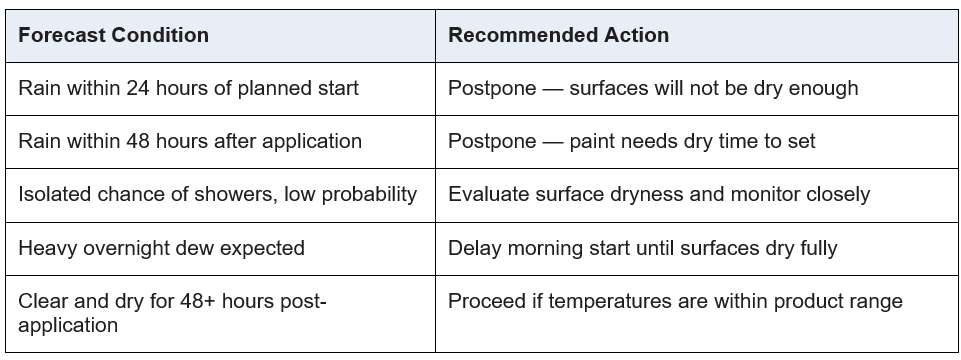
Rain in the forecast does not automatically cancel a painting job, but it does require careful evaluation. The key question is whether the surface will be dry at the time of application and whether the paint will have enough dry and cure time before any moisture arrives. For more insights, check out this guide on the best time to do exterior painting.
In Leavenworth's fall season, rain forecasts carry more weight than they do in summer because the drying time between rain events gets longer as temperatures drop. A surface that dries out in four hours on a warm July afternoon may still be damp 24 hours later on a cool October day with limited sun.
The safest approach is a clear 48-hour window on both sides of the application — dry conditions before painting begins and dry conditions for at least 48 hours after the final coat goes on. That buffer protects the paint film during its most vulnerable stage and gives it the best chance of curing correctly before any weather changes move through.
Is It Worth Starting an Exterior Paint Job in Late Fall If You Cannot Finish Before Winter?
Not necessarily. Leaving prepared or partially coated surfaces exposed through winter can create moisture and adhesion risks, so the safest next step depends on the surface and product system. Exposed areas where old paint has been removed or sanded are now vulnerable to moisture without the protection of a finished topcoat. Wood siding in particular will absorb winter moisture aggressively through any unfinished section, which can lead to swelling, cracking, and rot that makes the spring project significantly more expensive.
There is also the adhesion issue between coats. Paint applied in fall that sits through a freeze-thaw cycle before the next coat goes on in spring may not bond correctly to the layer underneath, even if each individual coat looked fine when it was applied. The interface between an old fall coat and a new spring coat is a weak point that experienced painters avoid by treating the project as a single continuous job done in proper conditions.
If your project cannot realistically be completed within a solid weather window this fall, the right call is to protect any prepped surfaces temporarily and reschedule for spring. That is not a setback — it is the decision that protects both your home and your investment in the paint job itself. For more information on timing, check out when is the best time to do exterior painting.